
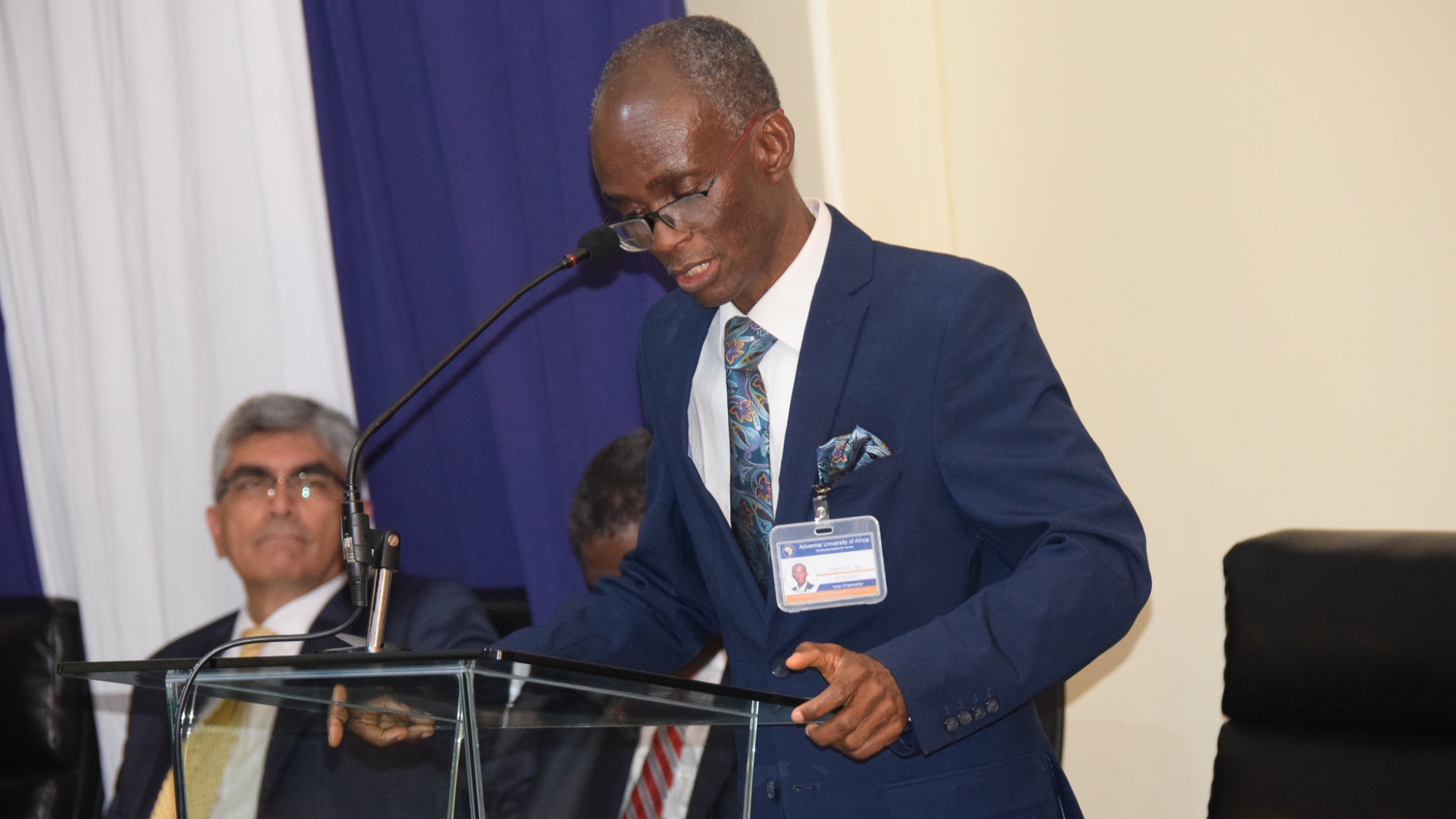
1. What inspired you to accept the call to serve as Vice-Chancellor of AUA at this time?
This is a defining moment for both the Adventist University of Africa and the Church on the continent. With nearly half of the world’s Seventh-day Adventist population residing in Africa, and with the continent’s youthful and dynamic demographic profile, AUA has a unique and urgent mandate to shape the future of mission, leadership, and Christian higher education. The convergence of Africa’s immense potential and its complex challenges calls for bold, Christ-centred leadership, and I felt compelled to respond to this moment with faith, conviction, and a commitment to service.
2. As you begin your tenure, what initial impressions or opportunities do you see for AUA’s growth and impact?
What stands out immediately is the extraordinary potential AUA possesses to become a globally recognised, locally responsive, and mission-centric postgraduate institution. There are significant opportunities to recalibrate curricula for 21st-century relevance, strengthen research productivity, address delays in thesis completion, expand blended and digital learning, and intentionally empower women in leadership and ministry. Through targeted innovation, strengthened systems, and renewed focus on our mission, AUA can serve as a transformative engine for the Church and society across Africa and beyond.
3. What possibilities do you see for expanding partnerships and collaborations to strengthen AUA’s academic mission?
Collaboration will be central to AUA’s next phase of growth. The University is well-positioned to become a hub for Adventist higher education in Africa by forging deeper partnerships with SDA universities and colleges through joint programmes, faculty and student exchanges, shared research initiatives, and library consortia. Strategic engagement with the General Conference, Divisions, Unions, NGOs, governments, and global academic institutions can further enhance research relevance, resource mobilisation, regulatory compliance, and international recognition—amplifying AUA’s academic and missional impact.
4. How do you envisage strengthening AUA’s contribution to the global Church mission?
At the heart of AUA’s mandate is service to the mission of the global Church. This contribution will be strengthened by aligning our academic programmes, research agenda, and institutional strategy with the World Church’s “I Will Go” initiative. By nurturing mission-oriented faculty, integrating digital evangelism, linking research outcomes to Church needs, and preparing leaders who are biblically grounded, ethically anchored, and socially engaged, AUA will function as a mission-focused postgraduate institution, equipping leaders for service in Africa and across the world.
5. What message would you like to share with students, faculty, alumni, and partners as you begin this leadership journey at AUA?
As I begin this leadership journey, my message is one of shared purpose, hope, and commitment. AUA is not merely a degree-awarding institution; it is a missionary outpost, a leadership incubator, and a beacon of truth and service. Together, through servant leadership, collaboration, prudent stewardship, and unwavering faithfulness to our Adventist heritage, we can build an institution that responds creatively and courageously to the demands of 21st-century Africa. Now is the time to build—for Africa, for the Church, and for Christ.
Ademola S. Tayo, PhD
Add a Comment