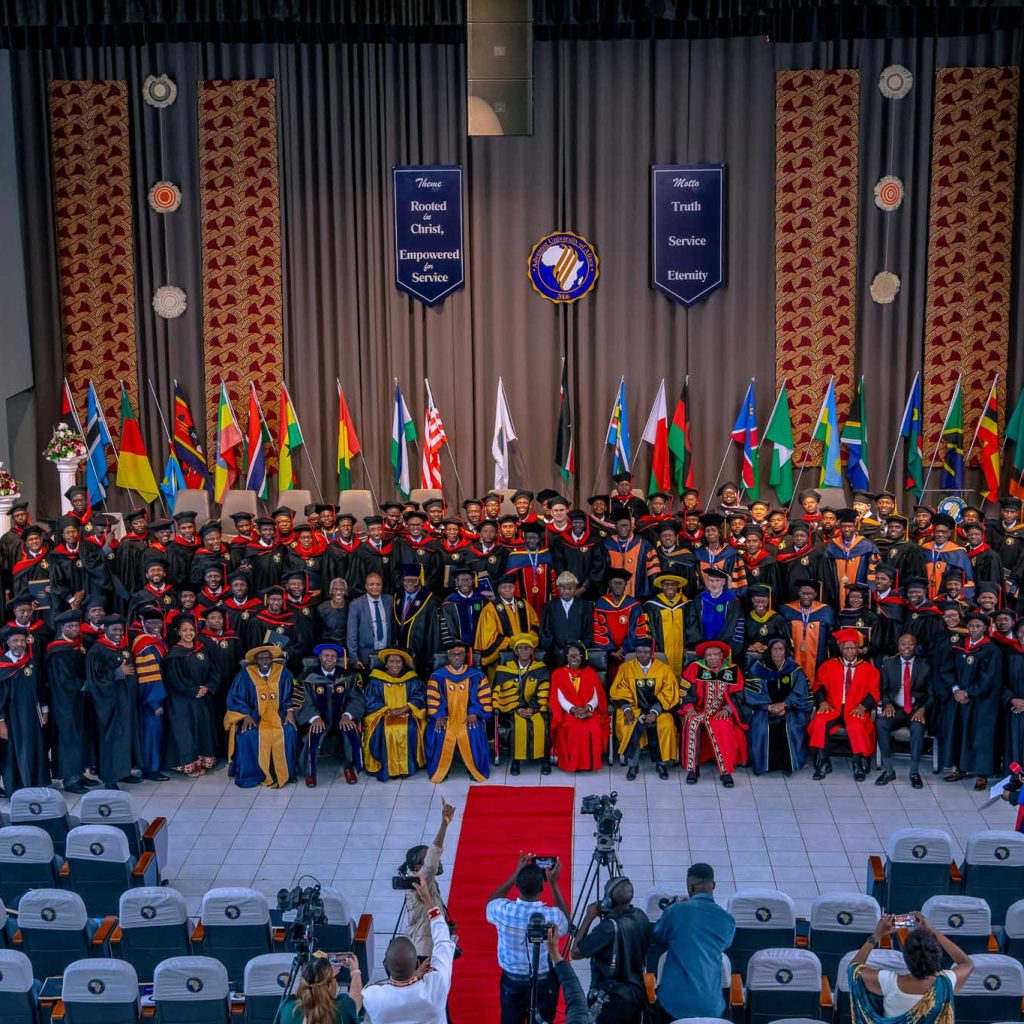
There is a particular kind of joy that settles over a campus when it marks a milestone that is both historical and deeply personal. That is what Advent Hill felt like this past weekend.
From Friday evening through Sunday afternoon, the Adventist University of Africa (AUA) hosted three days of worship, celebration, and institutional renewal — its 15th Graduation Ceremony, combined with the Installation of Professor Ademola S. Tayo as the 4th Vice Chancellor. Held at the Simeon Nyachae Auditorium, the weekend drew church leaders representing the General Conference and three SDA African Divisions, government officials, fellow Vice Chancellors, faculty, alumni, students, and the proud families who have walked every step of this journey alongside their graduates.
The theme chosen by the graduating class captured both the spirit of the weekend and the mission of the institution: “Rooted in Christ, Empowered for Service.”
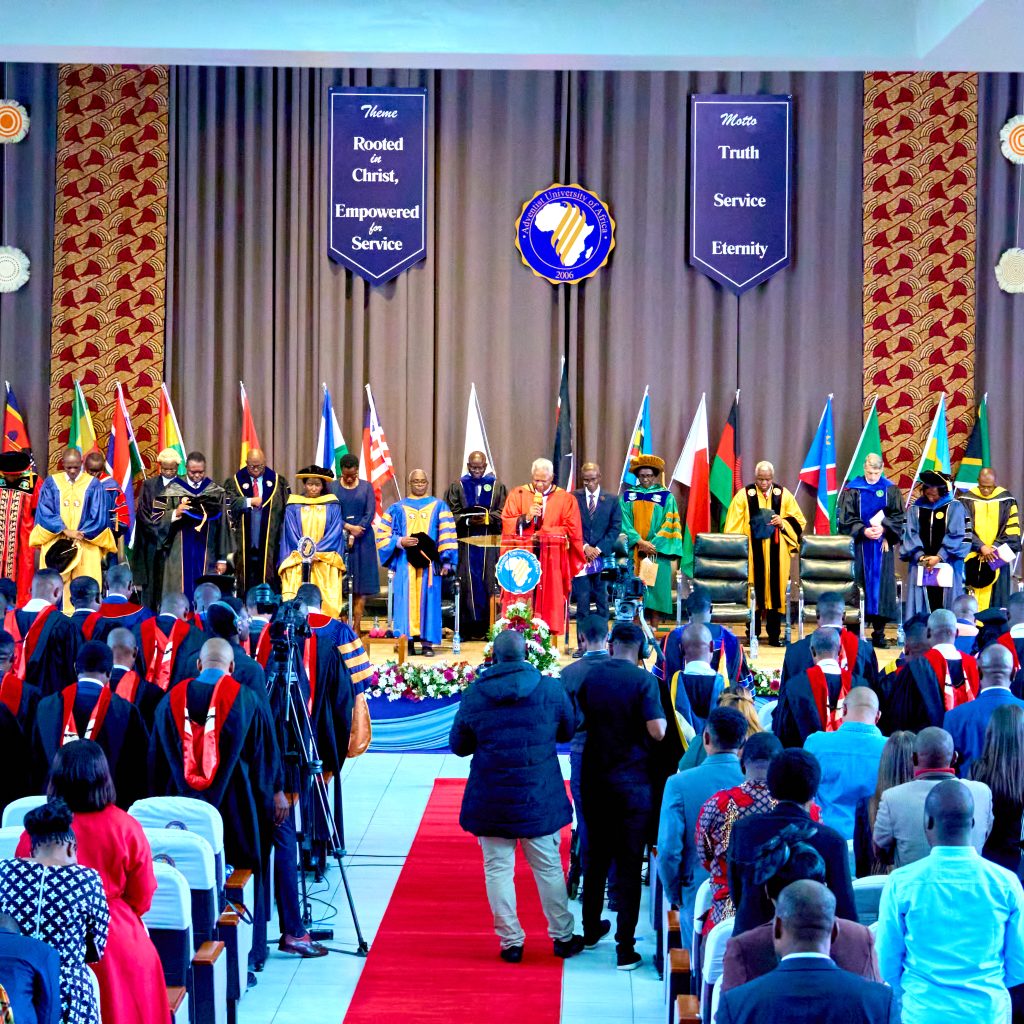
Friday Evening: Setting the Heart Right
The weekend opened on Friday, June 26, with a Consecration Service at 7:00 p.m. Before anything else — before the ceremony, the gowns, the handshakes and photographs — the graduates gathered to do what Adventist education has always asked them to do first: turn toward God.
Dr. Jongimpi Papu, Associate Ministerial Secretary of the General Conference of Seventh-day Adventists and Editor of Ministry Magazine, preached the Consecration Sermon, Why Service Matters. A scholar-practitioner in missiology and church leadership, Dr. Papu brought both intellectual rigour and pastoral warmth to a gathering that needed both. Graduating students from Angola provided special music — a reminder of how far the AUA community stretches across the continent.
The Chaplain of the Eagle Graduating Class, Godfred Kwesi Ataburo, led the class response. It was a fitting beginning — unhurried, worshipful, and pointed squarely at the reason any of them were there.
Saturday: A Full Sabbath on Advent Hill
Sabbath, June 27 unfolded in three movements, each distinct in character.
The Baccalaureate Service opened with processional music and the Doxology. Dr. Moses Ndimukika Maka, Executive Secretary of the East-Central Africa Division — a man who has himself given over 32 years to the Seventh-day Adventist Church — delivered the Baccalaureate sermon. His title echoed the class theme: “Rooted in Christ, Empowered for Service.”
The Tribute Service belonged entirely to the students. One by one, representatives from the graduating class took the podium to honour the people who made their education possible. Tributes were offered to families and spouses, to faculty and staff, to the university itself, and to sponsors. A class gift was presented, roses distributed, and the room filled with the kind of gratitude that does not easily find its way into formal speeches — but found its way fully into this one.
The Commencement Service: On Roots, Fruits, and Eternity
The installation gave way seamlessly to the Commencement Service, and it was Dr. Robert Osei-Bonsu — Council Chair, General Vice-President of the General Conference, former AUA faculty member, and former Dean of the Theological Seminary — who stood to preach. He began by telling the graduates something simple and true: “This university is not distant to me. It is close to my heart.” He had watched some of the faces in front of him arrive as students. Now he was sending them forth.
He anchored his address in Colossians 2:6-7 and built from it a sustained, searching meditation on what it truly means to be rooted.
“A tree does not survive because of what everybody sees,” he said. “It survives because of what almost nobody sees. Its strength lies beneath the surface. So it is with a Christian graduate. Your degree will be visible. Your title will be visible. Your regalia today is visible. But what will preserve you through temptation, pressure, disappointment, and even success itself — is not what is on the surface. It is what is underground. It is the depth of your walk with God.”
He named the defining spiritual danger of this age not as ignorance, but as rootlessness. “We live in a time when people can be informed but are not transformed. People may be connected but not grounded. People may be visible but not trustworthy. We can learn to build platforms before we learn to build character. We can master methods before we submit to the Master. But the gospel reverses that order. In the kingdom of God, inward formation comes before enduring public usefulness. Christ first, then calling. Christ first, then competence. Christ first, then credibility.”
Drawing from seasons, rivers, the morning sun, and the winter trees he had watched burst back to life in spring, he counselled the graduates against impatience and anxious ambition. He spoke from personal experience: there were seasons in his own ministry when doors he expected to open did not open. “The silence of a closed door is not the absence of God,” he said. “Human beings may frustrate a process, but they cannot overturn a purpose whose time has come in the will of God. Don’t rush. Be in God’s purpose.”
On the class motto — Truth, Service, Eternity — he lingered with intention. “Truth in an age of confusion is an act of discipleship,” he said. “It means intellectual honesty, moral clarity, reverence for Scripture, and respect for evidence. Jesus did not merely teach truth — He declared, I am the truth. Therefore, to live truthfully is to live Christ’s word.” On service: “Service is theology made visible. Service is love with hands and feet. If Christ washes feet, no work done in His spirit is beneath your dignity. If Christ touched lepers, no human pain should be unworthy of your attention. The more educated you become, the more accessible you should be to those who need wisdom, compassion, and help.” And on eternity: “We live in a world obsessed with immediacy — instant results, instant fame, instant visibility. Adventist education refuses to imprison human life within the present moment. The eternal perspective does not make us careless about the present. It makes us faithful in it.”
His pastoral charge to the graduates was the most personal moment of the entire weekend:
“Stay rooted when you are praised. Stay rooted when you are opposed. Stay rooted when success tempts you to self-sufficiency. Stay rooted when failure tempts you to despair. Remain in Christ when you enter the office. Remain in Christ when you enter the classroom, the boardroom, the village, the hospital, the pulpit, the research lab, the digital space, or the mission field. Do not separate devotion from vocation. Do not separate excellence from holiness.”
He closed with a prayer for the record that AUA’s Class of 2026 will leave behind them: “My prayer is that when history tells the story of this graduating class, it will not simply say you were intelligent — it will say you were anchored. It will not simply say you were accomplished — it will say you were faithful. It will not simply say you were admired — it will say you reflected Jesus Christ in all aspects of your life.”
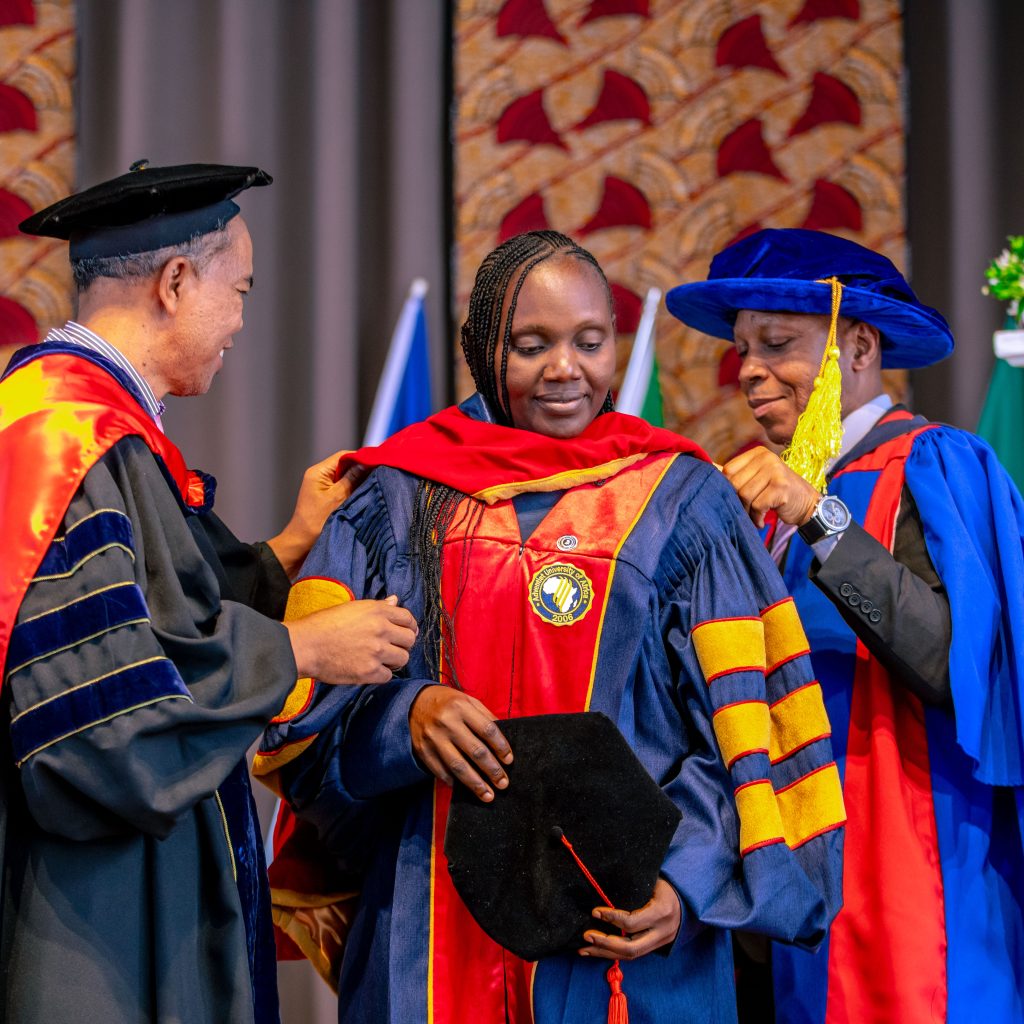
Dean of the School of Postgraduate Studies Dr. Lossan Bonde and Dean of the Theological Seminary Dr. Feliks Ponyatovskiy then presented their candidates. Chancellor Akombwa conferred the degrees, and Prof. Tayo — in one of his first official acts as installed Vice Chancellor — presented degrees alongside Registrar Samson Otieno Ooko.
Student Excellence Awards were announced by Deputy Vice Chancellor Dr. Moses Mpiima Kibirango. Class President Harriet Osaretin Ikhane delivered the Class Response, and the new alumni were inducted into the AUA Alumni Association by its President, Dr. Gerald Nyarega Mochoge.
The Eagle Graduating Class of 2026
The Eagle Graduating Class of 2026 chose their identity with care. Their class name evokes Isaiah 40:31 — *”Those who wait upon the Lord shall renew their strength and mount up with wings like eagles.”* Their motto, Truth, Service, Eternity, speaks of what their time at AUA was meant to cultivate. Their colours — Regal Blue and Celestial Grey — carry meaning their own Vice Chancellor unpacked for them: Regal Blue for authority, wisdom, trust, and excellence; Celestial Grey for balance, calmness, maturity, and the sophistication needed to navigate a complex world with grace.
Graduates in the Class of 2026 came from across the African continent: Angola, Botswana, Cameroon, Democratic Republic of Congo, Ethiopia, Gambia, Ghana, Guinea, Kenya, Lesotho, Liberia, Madagascar, Malawi, Namibia, Nigeria, Rwanda, South Africa, South Sudan, Tanzania, Uganda, Zambia, and Zimbabwe. Their doctoral dissertations touched some of the Church’s most pressing questions: tithing behaviour and trust in Rwanda; digital maturity and organisational resilience among Adventist self-supporting ministries in Kenya; youth outreach strategies in South Sudan; faith-based fundraising in Botswana; women as mission mobilizers in Nigeria; and a systematic theology inquiry into divine love, human freedom, and the universal salvific will of God.
The 2026 class brings AUA’s cumulative total to 1,192 graduates — alumni now serving in churches, institutions, health systems, and communities across Africa and the world.